Yuncheng, Shandong — The radiator and cooling system play a vital role in engine thermal management, operational stability, and overall vehicle lifespan. During winter months and freezing conditions, improper coolant maintenance, rust, scale, or fluid leakage can quickly lead to engine overheating (coolant boiling) or severe block cracking.
When an engine overheats, excessive thermal expansion reduces component clearances and thins engine oil viscosity, causing accelerated mechanical wear. If not addressed immediately, this can lead to catastrophic piston scuffing or total engine seizure.
I. Emergency Response: What to Do When the Engine Overheats
If white steam billows from under the hood or the temperature gauge rapidly spikes to the "H" (Hot) mark during transit, the engine is experiencing dangerous overheating:
Critical Safety Warning: Engine Overheating Hazards
- DO NOT attempt to keep driving, as this can cause permanent cylinder deformation or complete engine failure.
- DO NOT open the radiator pressure cap while the engine is hot—boiling pressurized steam and coolant can cause severe scalding burns.
- DO NOT pour cold water directly onto a hot engine block or cylinder head, as thermal shock will cause the cast iron to crack.
Emergency Step-by-Step Handling
- Pull Over Safely (Keep Idle): Safely park the truck immediately, but do not shut off the engine right away. Allow the engine to run at idle to continue coolant circulation, and pop the hood to accelerate thermal dissipation.
- Inspect for Leaks: After a few minutes, check underneath the engine compartment for visible coolant puddles or active leaks.
- Engine Shutdown: Once the temperature needle drops back down into the normal range, turn off the engine.
- Carefully Inspect Fluid and Belts: Wrap a thick wet cloth around the radiator cap and slowly turn it 1/4 turn to release residual pressure. Once steam stops escaping, remove the cap completely. Check fluid level, coolant condition, and fan belt tension.
- Recovery or Low-Speed Transport: If there is a major leak or a broken fan belt, contact a roadside towing service. If minor, allow the engine to cool completely and drive at low speeds directly to a service facility.
II. Winter Maintenance Guidelines for Truck Radiators
To maintain thermal efficiency and avoid costly downtime, follow these essential maintenance protocols:
- Routine Antifreeze (Coolant) Replacement:Replace engine coolant every 20,000 kilometers or once a year. High-quality heavy-duty antifreeze raises the boiling point, prevents corrosion/scaling, lubricates the water pump, and lowers the freezing point to protect the block during sub-zero winter temperatures.
- Never Add Tap Water:When coolant levels are low, avoid topping off with tap water. Tap water contains minerals, chlorine, and impurities that cause severe internal scaling, rust, and cooling channel blockages, which drastically reduce heat transfer.
- Prevent Scale, Rust, and Acid Oxidation:As coolant oxidizes over time, it turns acidic and corrodes radiator cores, aluminum tanks, and water pump impellers. Regularly flush the cooling system during routine servicing to clear out sediment and scale build-up.
III. Manufacturing Excellence at Yuncheng Jianxing
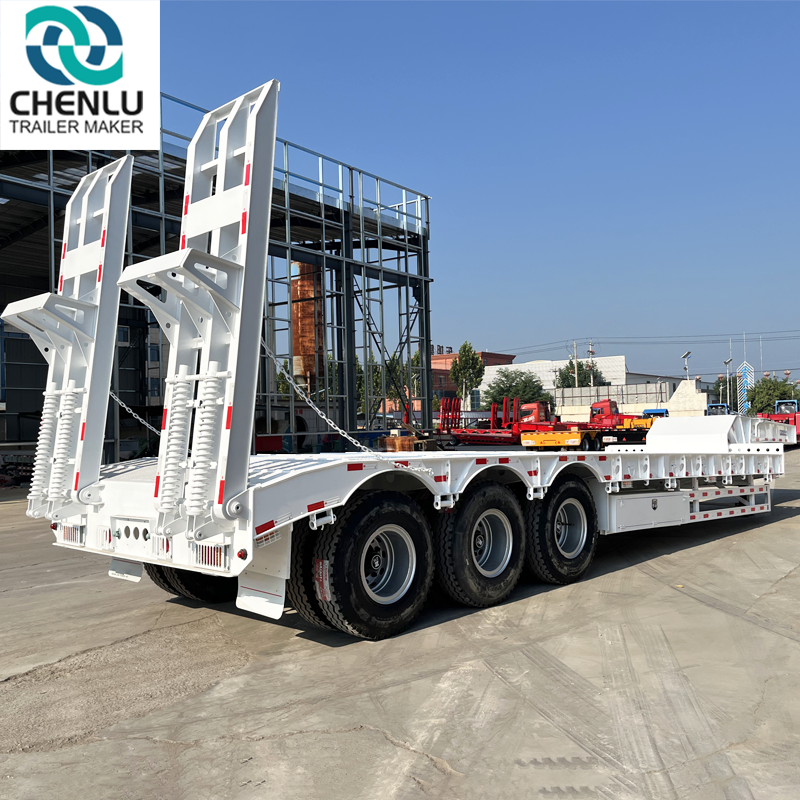
Operating a 140-acre smart manufacturing plant with an annual capacity of 9,000 units, Yuncheng Jianxing Special Vehicle Manufacturing Co., Ltd. produces heavy-duty lowbed semi-trailers, container skeleton trailers, and dump trailers built to withstand extreme operational environments and harsh winter conditions.
Serving as a designated OEM partner for major heavy truck manufacturers like Sinotruk and Dongfeng Commercial Vehicle, Jianxing integrates 27 national utility model patents, ISO9001 and CCC certifications, and exports premium transport equipment to over 20 countries worldwide—including maintaining the No. 1 market share in Vietnam for 5 consecutive years.