

Yuncheng, Shandong — Driving heavy tractor-trailers during winter and early spring presents severe environmental hazards across highway corridors. Beyond black ice and frozen pavement, melting snow, sleet, and accumulated road slush create continuous surface spray. When a multi-axle semi-trailer travels at high speeds, its rotating tires kick up massive volumes of water, road dirt, and slush into the air.
Combined with the aerodynamic vacuum and turbulent eddies trailing behind a large commercial box or container trailer, this spray forms a dense, semi-opaque "water curtain" or fog barrier. This dramatically reduces visual range for surrounding motorist traffic—especially smaller passenger cars—and poses significant highway safety risks.
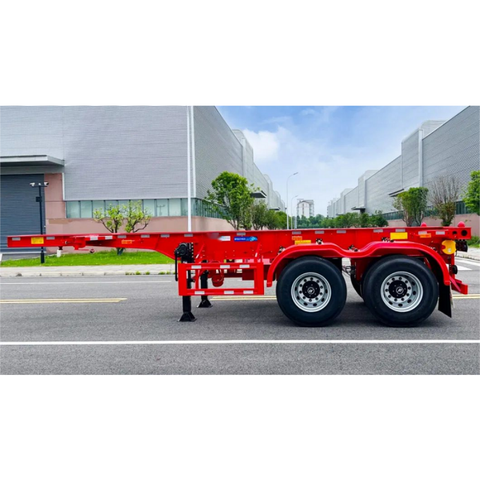
I. The Risk: How Semi-Trailer Spray Impacts Highway Safety
1. Blinding Low-Profile Passenger Vehicles
Passenger cars ride significantly lower to the road surface than commercial truck cabs. When a passenger vehicle attempts to pass or follow a heavy tractor-trailer on a wet highway, tire spray covers the car's windshield with water, road grit, and chemical de-icers, causing sudden visual blackouts before wipers can clear the glass.
2. Aerodynamic Vacuum Turbulence
The boxy rear profile of heavy semi-trailers creates a low-pressure zone that sucks up airborne moisture from the tire envelope, holding fine water droplets suspended directly in the trailing lane.
3. Friction Loss & Road Hazard Accumulation
Without proper mudguards, tires throw sharp gravel, ice chunks, and road debris directly into behind-the-truck traffic, risking broken windshields, pitted paintwork, and sudden panic braking.
II. Technical Solutions: Full-Coverage Mudguards & Anti-Spray Rubber Flaps
Establishing a safe highway environment requires proactive fleet maintenance and effective equipment design:
1. Full-Coverage Arch Wheel Guards (Fenders)
Installing curved, full-coverage poly or steel arch fenders over semi-trailer tandem/tri-axle groupings contains water flung off the top of rotating tires, funneling it directly back down onto the road surface rather than atomizing it into the air stream.
2. High-Density Rubber Anti-Spray Flaps
Equipping the rear bumper and fender trailing edges with heavy-duty rubber or textured anti-spray flaps absorbs water energy. Premium flaps feature rain-diverting surface bristles or internal channels that trap water droplets and drain them smoothly downward instead of atomizing them into fine mist.
3. Routine Inspection & Maintenance Standards
Fleet operators should inspect mudflap mounting brackets and rubber flexible skirts during pre-trip audits. Missing, torn, or loosely bolted flaps should be replaced immediately before wet-weather haulage.
III. Manufacturing Integrity and Safety Standards at Yuncheng Jianxing
Promoting road safety begins with detailed vehicle engineering and complete protective equipment. Operating a 140-acre smart manufacturing facility with an annual production capacity of 9,000 units, Yuncheng Jianxing Special Vehicle Manufacturing Co., Ltd. engineers premium lowbed semi-trailers, container skeleton trailers, drop-side fence trailers, and heavy dump trailers built for all-weather highway service.
Serving as a designated OEM manufacturing partner for Sinotruk and Dongfeng Commercial Vehicle, Jianxing integrates 27 national utility model patents, operates under ISO9001 and CCC quality certifications, and exports compliant, high-performance transport equipment to over 20 countries worldwide—including maintaining the No. 1 market share in Vietnam for 5 consecutive years.