

Yuncheng, Shandong — While routine maintenance on prime movers and trailer chassis is common practice, the spare tire is frequently overlooked during daily fleet inspections. During long-haul logistics operations, an improperly maintained spare tire can fail when needed most, leading to unexpected downtime and safety hazards.
Below is an actionable maintenance guide for semi-trailer spare tires, along with critical operational guidelines for heavy-duty lowbed and dump semi-trailers.
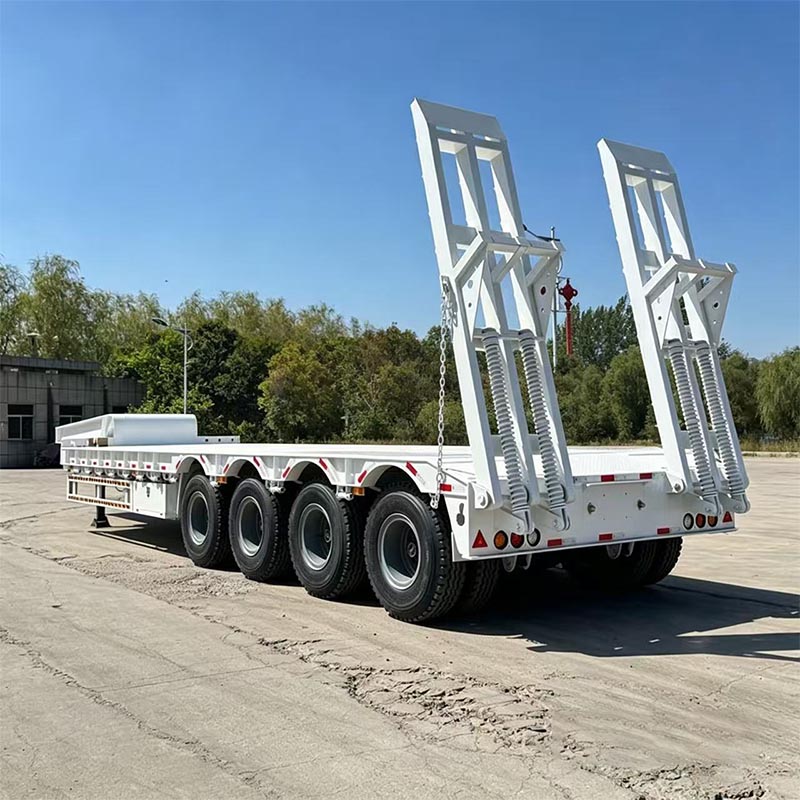
I. Essential Spare Tire Maintenance Checklist for Semi-Trailers
- Regular Inflation and Pressure Audits:Inspect the spare tire's cold inflation pressure monthly. Because spare tires naturally lose pressure over time due to ambient temperature changes, maintain the pressure slightly higher (5–10%) than standard drive-axle tire specifications.
- Sidewall and Tread Inspection:Examine the spare tire for age-related cracking, sidewall bulge, or uneven tread wear. Rubber tires naturally degrade and harden over a 4-year service life; an aged tire with micro-cracks should never be used for high-speed or heavy-load highway driving.
- Prevent Petrochemical Contamination:Ensure that lubricating oils, diesel fuel, or hydraulic fluids do not come into contact with stored spare tires. Petroleum products dissolve rubber compounds, causing swelling and structural failure. If oil contamination occurs, clean the tire immediately with a neutral detergent.
- Inspect Mounting Carriers and Winches:Regularly check the spare tire carrier, winch mechanism, securing chains, and safety bolts. Lubricate the cable winch mechanism and inspect welds to ensure the tire does not detach while in transit.
II. Operational Safety Guidelines for Lowbed and Dump Semi-Trailers
Beyond spare tire upkeep, maintaining safe driving and operational habits during specialized transport is essential:
- Rainy Season Driving & Lowbed Operations:When operating lowbed semi-trailers in heavy rain or on icy mountain roads, maintain low speeds, utilize proper engine braking, and ensure all LED lighting and wipers function properly to maintain maximum visibility.
- Payload Distribution:Always load goods evenly across the cargo floor. Avoid severe off-center or asymmetrical loading to prevent frame twisting, excessive axle strain, or rollover risks during tipping operations.
- Hydraulic Tipping & Power Take-Off (PTO) Engagement:When operating hydraulic dump trailers, fully depress the clutch pedal before engaging the PTO switch to prevent gear clashing.
- Engine RPM Limits During Elevation:Keep engine speed below 2000 RPM during box elevation. Once the box reaches a 40-degree angle, do not slam or pump the accelerator pedal, as sudden pressure spikes can damage the hydraulic limit valve, hoisting cylinder, and chassis frame.
III. Manufacturing Excellence at Yuncheng Jianxing
Combining strict operational discipline with high-grade engineering ensures maximum transport safety and ROI. Operating a 140-acre smart manufacturing facility with an annual capacity of 9,000 units, Yuncheng Jianxing Special Vehicle Manufacturing Co., Ltd. engineers heavy-duty lowbed semi-trailers, container skeleton trailers, fence trailers, and dump trailers built to withstand extreme operational conditions.
Serving as an OEM manufacturing partner for Sinotruk and Dongfeng Commercial Vehicle, Jianxing integrates 27 national utility model patents, ISO9001 and CCC certifications, and exports premium commercial trailers to over 20 countries worldwide—including maintaining the No. 1 market share in Vietnam for 5 consecutive years.