

Yuncheng, Shandong — Tractor-trailers serve as the fundamental workhorses of modern highway freight and intermodal logistics. By pairing a powered tractor unit with one or more non-powered trailer units, commercial transport combinations significantly increase payload capacity, enhance operational flexibility, and improve overall transport efficiency.
Understanding the technical distinctions between different trailer coupling types and executing systematic maintenance routines—particularly during wet and rainy seasons—is essential for extending vehicle service life and preserving road safety.
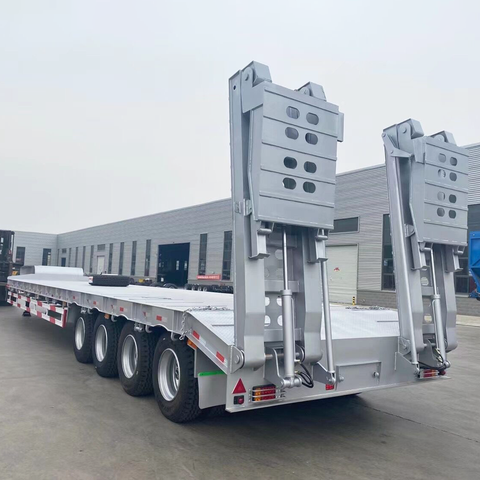
I. Defining the Combination: Full Trailers vs. Semi-Trailers
A trailer is an unpowered road vehicle designed to be towed by a prime mover, truck tractor, or tow vehicle. Trailed combinations fall into two main structural categories based on how weight is supported and transferred:
1. Full Trailers (Drawbar Trailers)
A full trailer features front and rear axle assemblies, allowing its entire unladen and payload weight to be supported independently by its own chassis. It connects to the towing vehicle via a swivel drawbar and tow hitch, transferring draft force without imposing vertical load onto the towing vehicle.
2. Semi-Trailers (Kingpin Coupling)
A semi-trailer places its axle assembly behind the vehicle's center of gravity. It connects to the tractor unit via a heavy-duty kingpin inserted into the fifth-wheel coupling plate. In this configuration, a substantial portion of the trailer's total weight and vertical payload is borne directly by the prime mover's drive axles.
II. Essential Maintenance Routine for Commercial Trailers
Executing routine preventative maintenance, especially following severe weather or high-humidity operations, protects critical structural components and electrical architectures from premature wear and corrosion:
1. Exterior Paint Protection & Sealant Application
Rainwater contains environmental pollutants and acidic compounds that can degrade paint finishes and trigger metal oxidation. Applying protective paint sealants or protective wax coatings helps shield chassis surfaces and side panels from environmental corrosion.
2. Chassis Anti-Corrosion Treatment & Underbody Washing
Because trailer chassis and underbody structures operate close to road surfaces, they are highly susceptible to moisture, mud, and road salt. Regular pressure washing followed by applying anti-rust undercoating protects main beams, crossmembers, and brake linkages.
3. Cabin Sanitization and Sleeper Interior Care
For tractors with sleeper cabs, high humidity promotes mold growth and bacteria accumulation. Deep-cleaning upholstery and maintaining dry interior conditions protect driver health during extended long-haul shifts.
4. Electrical System & Wiring Inspection
Exposed wiring harnesses, 7-pin lighting sockets, and junction boxes must be inspected regularly for insulation cracks, moisture ingress, or short circuits to prevent lighting or ABS signal failures during transit.
5. Interior Dehumidification & HVAC Care
Periodically run the vehicle heating system or park the tractor with open windows in direct sunlight to allow air circulation, driving out trapped cabin humidity and preventing interior mold growth.
III. Manufacturing Quality and Technical Excellence at Yuncheng Jianxing
Long-term durability begins with advanced structural engineering and premium surface coating processes. Operating a 140-acre smart manufacturing facility with an annual production capacity of 9,000 units, Yuncheng Jianxing Special Vehicle Manufacturing Co., Ltd. engineers high-performance lowbed semi-trailers, container skeleton trailers, fence trailers, and dump trailers built for severe operational environments.
Serving as a designated OEM manufacturing partner for Sinotruk and Dongfeng Commercial Vehicle, Jianxing integrates 27 national utility model patents, ISO9001 and CCC quality management certifications, and exports commercial transport equipment to over 20 countries worldwide—including holding the No. 1 market share in Vietnam for 5 consecutive years.